
Whole home rewiring cost in Findlay: what to expect
Whole home rewiring in Findlay, Ohio costs $8,000 to $25,000 in 2026, or roughly $4 to $10 per square foot. Here is what actually drives your number up or down.
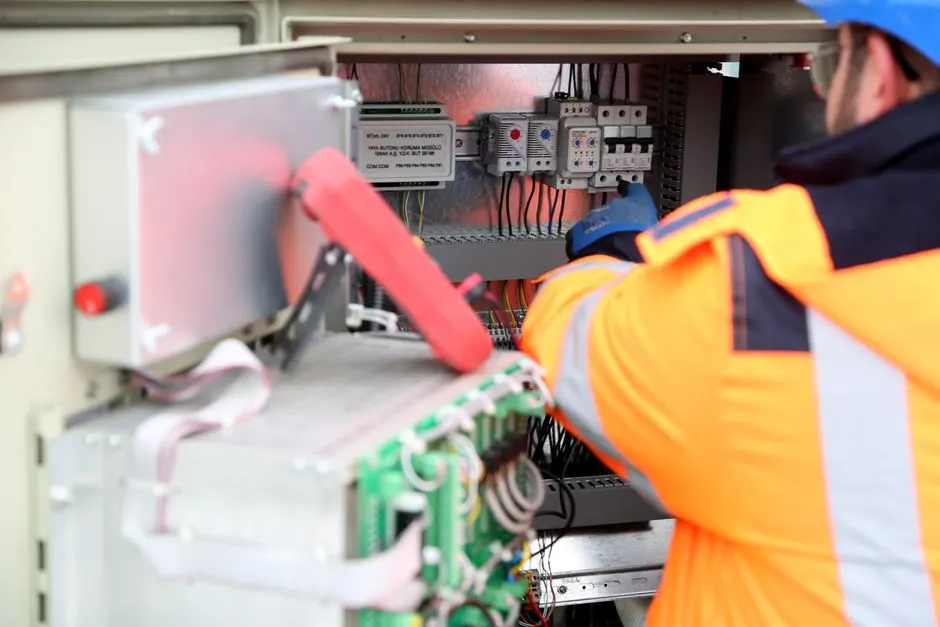
Whole home rewiring in Findlay, Ohio costs between $8,000 and $25,000 in 2026, with most single-family homes landing between $11,000 and $17,000. That works out to roughly $4 to $10 per square foot of living space. Whole home rewiring is the full replacement of a house's branch wiring, devices, and usually the panel, so every circuit in the home meets current code and can carry modern electrical loads.
Below we break down what that range actually looks like house by house, what pushes a quote toward the top of it, and how to tell whether you need the whole house done or just part of it.
What whole home rewiring costs in Findlay in 2026
Typical 2026 pricing in Findlay breaks into three tiers, and the tier you land in is decided almost entirely by the wiring already inside your walls.
- Smaller or partial homes (under 1,200 sq ft): $8,000-$12,000
- Average Findlay home (1,200-2,000 sq ft): $11,000-$17,000
- Larger homes, finished basements, or heavy code upgrades (2,000+ sq ft): $18,000-$25,000
Those numbers include labor, 12-gauge and 14-gauge copper cable, new outlets and switches, AFCI and GFCI protection, drywall patching, and permit fees. They do not include a service upgrade from 100 amps to 200 amps, which runs $1,800-$3,500 on its own, or a full panel swap, which adds $1,500-$3,000.
Homes with knob-and-tube wiring sit at the top of every range. Knob-and-tube has no ground conductor, the insulation gets brittle with age, and it is often buried under blown-in insulation - which is a fire risk, not just an inconvenience. Removing it is slower work than pulling new cable through an existing conduit path.
Aluminum branch-circuit wiring from the late 1960s and 1970s is the other big cost driver. Aluminum connections loosen as they heat and cool, and every receptacle on an aluminum circuit needs a code-approved remediation method, usually copper pigtails with special connectors. That adds $40-$90 per device.
How much does whole home rewiring cost per square foot in Findlay?
Whole home rewiring in Findlay runs about $4 to $10 per square foot in 2026, and the per-square-foot number is the fastest way to sanity-check any quote you receive. A 1,500-square-foot ranch on a slab with an unfinished basement is a different job than a 1,500-square-foot two-story with a finished lower level, even though the square footage matches.
Here is why the spread is so wide:
- Access: Unfinished basements and attics make cable pulls fast. Plaster walls, cathedral ceilings, and finished basements make them slow.
- Wall material: Drywall patches and paints back in a day. Plaster and lath requires a plasterer, and that is a separate trade on your invoice.
- Circuit count: A 1950s Findlay home often has 8 to 12 circuits. A modern kitchen alone wants 6 to 8.
- Device count: Every outlet, switch, and fixture is a termination. A 1,600-square-foot home can carry 70 to 110 devices.
If your quote comes in under $3 per square foot for a full rewire, ask what is being left out. Usually it is the panel, the grounding, or the patching.
What actually drives your rewiring quote up or down
Five things move a Findlay rewiring quote more than anything else, and you can estimate each one before anyone walks through your door.
1. Panel and service capacity
A 100-amp panel from the 1970s will not carry a modern house. Adding a heat pump, an EV charger, or a finished basement pushes you past capacity fast. Most full rewires include an upgrade to a 200-amp service, and that alone accounts for $1,800-$3,500 of the total.
2. Grounding and bonding
Older homes often have no equipment ground at all, or a ground rod that no longer meets code. Bringing the system up to a proper grounding electrode conductor and bonding gas and water lines adds $400-$900.
3. Kitchen and bathroom circuits
Current code requires GFCI protection at kitchen counters, bathrooms, garages, and exteriors, plus dedicated circuits for the microwave, dishwasher, disposal, and refrigerator. If your kitchen has two outlets on one circuit, that gets rebuilt during a rewire - and it is the single biggest reason kitchen areas cost more per square foot than bedrooms.
4. Specialty loads
Hot tubs, EV chargers, generators, and shop equipment all need their own circuit and often their own breaker space. Each one adds $500-$2,500 depending on the run length and whether a subpanel is required.
5. Permits and inspection
Findlay and Hancock County require an electrical permit for a rewire, and the work is inspected. Permit fees on a residential rewire typically run $150-$400. Any contractor who suggests skipping the permit is telling you something about how the rest of the job will go.
Partial rewiring vs. whole house rewiring: which one do you need?
Not every home needs a full rewire, and a good electrician will tell you so. A partial rewire makes sense when the existing cable is modern copper with a ground and only specific areas are failing.
Signs you can get away with a partial rewire:
- Your panel is already 200 amps with modern breakers
- The visible wiring in the basement or attic is grounded Romex, not fabric-wrapped or aluminum
- Only one or two rooms have dead outlets or flickering lights
- You are remodeling a kitchen or adding a circuit, not fixing a system-wide problem
Signs you need the whole house done:
- Knob-and-tube or aluminum branch wiring anywhere in the walls
- Two-prong outlets throughout, or three-prong outlets with no ground behind them
- Breakers that trip when the microwave and toaster run together
- Warm or discolored outlet plates, or a faint burning smell near a switch
- A fuse box instead of a breaker panel
If you are already opening walls for a remodel, that is the cheapest moment you will ever get to rewire. The labor to fish cable through an open wall is a fraction of the labor to fish it through a finished one.
How long does a whole home rewire take?
A whole home rewire in Findlay takes 5 to 12 working days for an average 1,500-square-foot house, and larger homes with finished basements run 2 to 3 weeks. You can usually stay in the house during the work, though there will be days without power in specific rooms.
A realistic schedule looks like this:
- Days 1-2: Panel and service work, usually the longest single outage
- Days 3-7: Rough wiring - pulling cable, drilling studs, running home runs to the panel
- Days 8-10: Device installation - outlets, switches, GFCI and AFCI protection, fixtures
- Days 10-12: Patching, testing, and final inspection
We schedule the panel swap early so the rest of the job can proceed room by room. Most homeowners keep one bedroom and the kitchen powered on a temporary basis while we work the rest of the house.
Common mistakes homeowners make with rewiring quotes
The most expensive rewiring mistakes in Findlay happen before any cable gets pulled - they happen in how the job is scoped and quoted.
Comparing a full rewire to a partial rewire. A $4,500 quote and a $14,000 quote are almost never for the same work. Ask each contractor to list the circuits, the device count, and whether the panel is included.
Ignoring the panel. Rewiring a house and leaving a 40-year-old panel in place is like putting new tires on a car with a failing transmission. The panel is where the new circuits land.
Assuming patching is included. Drywall repair is often a line item, and it is a real one - budget $800-$2,500 depending on how many holes get cut. Ask up front who patches and who paints.
Paying for a rewire when you needed a repair. A single dead circuit is a $250-$600 diagnostic and repair, not a $14,000 rewire. Get a real diagnosis before you accept a full-rewire proposal.
Skipping the permit to save money. Unpermitted electrical work surfaces at resale, and Hancock County buyers' inspectors find it. The permit costs a few hundred dollars. The resale problem costs thousands.
When to call a professional
Call a licensed electrician the moment you see any of these: a burning smell near an outlet or panel, scorch marks on a receptacle, a breaker that trips repeatedly, or outlets that feel warm to the touch. Those are not maintenance items - they are active fire risks, and they get worse with every load you put on them.
Our team handles the full scope: diagnosis, panel work, circuit installation, and the final inspection. We give you a written price before we start, and we tell you honestly when a repair will do instead of a rewire. If you are weighing a full rewire against a smaller fix, we will walk your panel and your visible wiring with you and tell you which one your house actually needs.
Frequently Asked Questions
How much does it cost to rewire a 1,500 square foot house in Findlay?
Expect $11,000 to $17,000 in 2026 for a 1,500-square-foot Findlay home with a standard layout. Add $1,800-$3,500 if the service needs upgrading to 200 amps, and $800-$2,500 for drywall patching if the walls are finished.
Is whole home rewiring worth it?
Yes when the wiring is knob-and-tube, aluminum, or ungrounded. Those systems are fire and shock hazards that no repair fixes. If your home already has grounded copper Romex and a modern panel, a partial rewire or targeted repair is usually the better spend.
Can I live in my house during a rewire?
Most homeowners do. We work room by room and keep the kitchen and at least one bedroom powered. Expect 5 to 12 working days of disruption for an average home, with the panel swap causing the longest single outage.
Does homeowners insurance cover rewiring?
Rarely. Insurance covers sudden damage like a fire or a surge, not gradual deterioration of old wiring. Some carriers will non-renew a policy on a home with knob-and-tube or a fuse box, which is worth checking before you buy.
How do I know if my Findlay home needs rewiring?
Look for two-prong outlets, a fuse box, fabric-wrapped or aluminum cable in the basement, breakers that trip under normal loads, and warm or discolored outlet plates. Any two of those together means it is time for an electrician to inspect the system.
Get help with New Circuit Installation & Rewiring in Findlay
If your Findlay home is still running on knob-and-tube, aluminum branch wiring, or a panel that cannot keep up, we will give you a straight answer and a firm price before any work begins. Call Circuit & Rewiring Pros at +14197996088 and we will schedule a walkthrough of your panel and wiring.