
Why does my circuit breaker keep tripping in Findlay
A breaker that trips once is normal. A breaker that trips every week is telling you something. Here are the real reasons Findlay homes lose power - and what to do next.
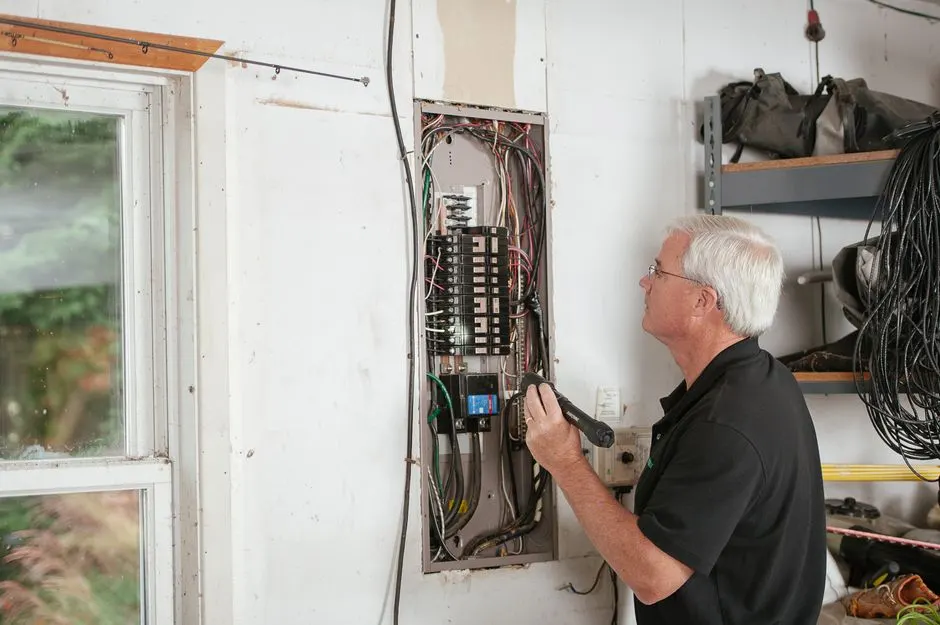
Your breaker keeps tripping because the circuit is drawing more current than the breaker is rated to carry, or because the breaker itself has failed. That is the short answer. The longer answer depends on whether you are tripping the same breaker every time you run the microwave, or a different breaker every few days for no obvious reason.
We handle this call several times a week in Findlay, and the fix is almost always one of five things: an overloaded circuit, a short circuit, a ground fault, a worn-out breaker, or wiring that was never sized for what you are asking it to do today. This post walks through each one, tells you which are safe to troubleshoot yourself, and explains when it is time to bring in an electrician.
What a tripping breaker actually means
A tripping breaker is a safety device doing its job. The breaker senses too much current flowing through the hot wire, heats up a bimetallic strip or trips a magnetic coil, and cuts power before the wire insulation melts or a fire starts.
So the trip itself is not the problem. The problem is whatever is causing the excess current. That could be a genuine overload (too many appliances on one circuit), a short circuit (hot wire touching neutral or ground), a ground fault (current leaking to ground through water or a damaged conductor), or a breaker that has simply worn out after years of service.
One definition worth keeping in your head: a circuit breaker is a resettable safety switch that opens the circuit when current exceeds its rating, protecting the wiring from overheating. It is not a fuse you replace - you flip it back on. But if you are flipping it back on every day, the breaker is not the thing that needs replacing.
The most common reasons breakers trip in Findlay homes
Findlay homes trip breakers for the same reasons homes trip breakers anywhere, but our housing stock and our seasons shape which causes show up most. Here are the five we see most often.
1. Overloaded circuits
This is the number one cause. A single 15-amp circuit in a 1970s ranch home was designed to run a few lamps and a television. Today that same circuit is powering a 1,500-watt space heater, a gaming PC, a soundbar, and a phone charger - and the math does not work.
Watts divided by volts gives you amps. A 1,500-watt space heater on a 120-volt circuit pulls 12.5 amps. Add a 1,200-watt microwave (10 amps) and you are at 22.5 amps on a 15-amp breaker. It trips. It is supposed to.
2. Short circuits
A short circuit happens when a hot wire touches a neutral wire or a ground wire. The resistance drops to near zero, current spikes instantly, and the breaker trips hard - often with a small pop or a burnt smell at the outlet.
Common causes we find in Findlay: rodent damage in attic or crawlspace wiring, a nail driven through a wire during a remodel, or a chewed lamp cord behind a couch. Short circuits are not a DIY fix. They require tracing the circuit and repairing the damaged section.
3. Ground faults
A ground fault is similar to a short but the current is leaking to ground through something it should not be - often water. In Findlay, we see this in kitchens and bathrooms where a GFCI outlet has tripped and the homeowner keeps resetting it without finding the moisture source.
If your GFCI keeps tripping, the outlet is working. The problem is a wet connection, a damaged appliance cord, or a wiring fault downstream. We install GFCI outlet installation in Findlay, Ohio regularly, and part of that job is confirming the circuit behind the outlet is dry and sound.
4. A worn-out breaker
Breakers do not last forever. After 20 to 30 years of service, the internal mechanism weakens and the breaker trips at lower currents than its rating. A 20-amp breaker that used to hold a 16-amp load might now trip at 12 amps.
If a breaker trips when nothing heavy is running, and it trips faster than it used to, the breaker itself is the likely culprit. Replacing it is a straightforward job - but only if the wiring and panel are in good shape. We handle circuit breaker replacement in Findlay, Ohio and always test the circuit under load before we close the panel.
5. Loose connections
A loose wire at a breaker terminal or at an outlet creates resistance. Resistance creates heat. Heat causes intermittent tripping and, in the worst case, a fire at the connection point. This is one of the most dangerous causes because it does not always trip the breaker - sometimes it just quietly overheats.
If you smell burning plastic near your panel or an outlet feels warm to the touch, stop using that circuit and call us. That is not a wait-and-see situation.
Why does my circuit breaker trip when I plug in a space heater?
Because a space heater is one of the highest-draw appliances you can plug into a standard outlet. Most portable heaters pull 1,500 watts, which is 12.5 amps on a 120-volt circuit. If that circuit is a 15-amp circuit - and many older Findlay homes have 15-amp bedroom circuits - you have only 2.5 amps of headroom before the breaker trips.
Add a lamp, a phone charger, or a TV on the same circuit and you are over the limit. The breaker trips, you unplug the heater, reset the breaker, and the cycle repeats next cold snap.
The fix is not a bigger breaker. Putting a 20-amp breaker on 14-gauge wire is a code violation and a fire hazard. The right fix is a dedicated circuit for the heater - a circuit that runs from the panel to a single outlet and serves nothing else. We install dedicated circuit installation in Findlay, Ohio for exactly this reason, and it is one of the most common winter jobs we run.
If you are not ready for a dedicated circuit yet, plug the heater into a different circuit than your electronics, and never use a power strip or extension cord with a space heater. Those cords are not rated for 12.5 amps of continuous draw.
Old wiring and undersized panels in Findlay's older neighborhoods
Findlay has a lot of housing built between 1940 and 1975, and a fair amount of it still has the original wiring. Two-gauge aluminum branch wiring, cloth-insulated conductors, and 60-amp or 100-amp panels were fine for the appliances of their era. They are not fine for a modern household running central air, an electric range, a dryer, a freezer, and two EVs.
If your panel is a 100-amp service and you have added a hot tub, a workshop, or an EV charger in the last few years, you are likely running the panel near its limit. Breakers trip more often because the whole system is strained, not because any single circuit is overloaded.
We see this constantly in the older blocks near downtown and along the residential streets off Main. Homeowners there often need electrical panel upgrades in Findlay, Ohio before they can add anything new - a subpanel in the garage, a dedicated circuit for a freezer, or a 240-volt line for an EV charger.
If your wiring is original to a 1950s or 1960s home and you have never had it inspected, the tripping may be a symptom of insulation that has dried out and cracked inside the walls. That is a rewiring conversation, not a breaker conversation. We handle electrical rewiring in Findlay, Ohio for homes where the wiring itself has reached the end of its service life.
Common mistakes homeowners make after a trip
The first thing most people do after a breaker trips is walk to the panel and flip it back on. That is fine once. It is a mistake when it becomes a routine.
- Resetting the breaker without finding the cause. If it trips again within minutes, you have not fixed anything. You have just confirmed the fault is still there.
- Replacing the breaker with a larger one. A 20-amp breaker on 14-gauge wire will not trip when it should. The wire overheats, and the next failure is a fire inside the wall.
- Ignoring a breaker that trips without a load. If nothing is running and the breaker still trips, the problem is in the wiring or the breaker itself. That is a call-us-now situation.
- Using extension cords as permanent wiring. A 16-gauge extension cord running a space heater across a bedroom is a fire waiting to happen. Cords are temporary by design.
- Resetting a GFCI repeatedly without checking for moisture. A GFCI that trips every time it rains is telling you water is getting into a connection. Find it or call us.
One more: never tape a breaker in the ON position to stop it from tripping. That defeats the entire safety function of the device.
When to call a professional
Call an electrician when the same breaker trips more than twice in a week, when a breaker trips with nothing plugged in, when you see scorch marks or smell burning near the panel, or when your panel is warm to the touch. Those are not diagnostic puzzles - they are hazards.
You should also call if you are planning to add a major appliance, a hot tub, an EV charger, or a workshop. Adding load to a panel that is already near capacity is how small problems become expensive ones.
At Circuit & Rewiring Pros, we start every service call by testing the circuit under load and inspecting the panel connections. We tell you what we find, what it costs to fix, and what can wait. If the fix is a new breaker, we replace it. If the fix is a new circuit or a panel upgrade, we quote that before we start. You can see the full range of what we do on our New Circuit Installation & Rewiring Findlay OH page, or just call and describe what your breaker is doing.
One thing we will not do is put a bigger breaker on a circuit that cannot handle it. That is not a repair. That is a liability.
Frequently Asked Questions
How many times can I reset a tripped breaker before it is a problem?
Once is normal. Twice in a week is a pattern. If the same breaker trips three or more times in a month, stop resetting it and have the circuit tested. Repeated tripping means the underlying fault is still there, and each reset puts stress on the breaker mechanism.
Can a bad breaker cause a fire?
Yes, but not usually by tripping. The fire risk comes from a breaker that fails to trip when it should, or from a loose connection at the breaker terminal that overheats. A breaker that trips too easily is annoying. A breaker that does not trip at all is dangerous.
Why does my breaker trip only at night?
Because that is when you run the loads that push the circuit over its limit - space heaters, hair dryers, kitchen appliances, and electronics all cluster in the evening. If the trip happens at the same time every night, note what is running and add up the wattage. You will usually find the culprit in under five minutes.
How much does it cost to fix a tripping breaker in Findlay?
Typical 2026 pricing in this area runs $150 to $350 for a breaker replacement or a simple circuit repair, and $1,200 to $3,500 for a panel upgrade if that is what the diagnosis calls for. A dedicated circuit for a space heater or freezer usually lands between $350 and $800 depending on the run length.
Can I just replace the breaker myself?
You can buy a breaker at any hardware store, but the work inside a live panel is not a DIY job. One mistake at the main lugs can arc, and the panel is still energized even with the main breaker off in many older installations. We do this work every day with the right meter and the right gloves.
Get help with New Circuit Installation & Rewiring in Findlay
If your breaker keeps tripping, we can find out why and fix it - usually in a single visit. We serve Findlay and the surrounding Hancock County area, and we quote the work before we start.
Call Circuit & Rewiring Pros at +14197996088 to schedule a diagnostic visit. Tell us which breaker is tripping and what you had running when it happened, and we will come prepared.